Introduction to Great Man
Theory, Trait Theory & Three skill Approach Vs. Mumford et al skill Model

Great man theory holds the view of only men can be leaders
where they posse’s leadership traits by born.
According to them leaders are born not made & leadership
skills can’t be learned or developed. Great Man theory is the starting point
where people understands that human traits can make great leaders.
Great Man theory was restricted to a specific community
& there was no scientific way to explain it.
Once the Great Man theory faded, Trait theory has come up where
people started to focus on traits rather than the sex. Trait theory claims that
certain characteristics & personalities made individuals great leaders which
focused only on few defined traits in this theory.
Later in 1974 Robert Katz introduced the Three Skills
Approach which explains that a leader possesses certain skills that drives he
or she to perform better in a leadership role.
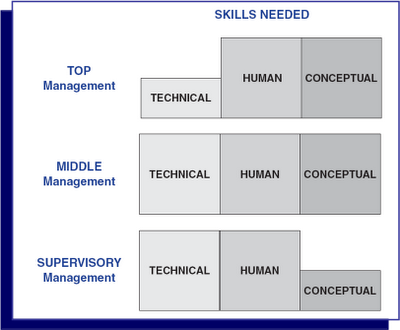
Technical skills are the profession or the expertise which a
person has in a specific area (Northouse, 2012).
Human skills are the ability to work as a team & engaging
with people (Northouse, 2012).
Conceptual skills are the ability to work with ideas &
concepts (Northouse, 2012).
Main advantage in skill approach is, it is encouraging the
people who are willing to become leaders & do not possess traits for it.
They can develop specific skills by finding relevant resources & by working
hard.
Focusing on identifying specific skills on leadership rather
than providing or explaining some influencing skills for leadership is one of
the main disadvantages in the skill approach.
In 2000, Mumford et al has introduced a new model based on
skills which a leader should have. They explain five main components which are,
1.
Individual Attributes
2.
Competencies
3.
Leadership Outcomes
4.
Career Experiences
5.
Environmental influences

Individual Attributes
This includes the skills of intelligence, Information
processing, Creative thinking, memory skills as General cognitive abilities.
The knowledge gained through the experiences as Crystalized cognitive
abilities.
Motivation & Personality.
Competencies
Social judgement skills & knowledge, Problem solving are
some of the items under competency.
Leadership Outcomes
Effective problem solving & performance of the leader.
Career Experiences
In the course of the leader’s career, gained experiences are
influencing their knowledge to solve complex problems where leaders can be
helped by challenging job roles, training & mentoring & hands on experience
to solve new & unusual problems (Northouse, 2007).
Environmental influences
This is a part of the skill model which is not under the
control of the leader. Available technologies, subordinates’ competencies,
communication quality, task complexity are identified as environmental
influences.
References
Edusada, S. (2016) Pros & Cons of Trait Theory, WIX.com.
Available at: https://shaunedusada.wixsite.com/thefirststep/single-post/2016/02/12/Pros-Cons-of-Trait-Theory.
Three Skills Approach
(2019) Pennsylvania State University. Available at: https://sites.psu.edu/leadership/2013/01/29/three-skills-approach/.
Katz’s Three-Skill Approach
(2013) TechnoFunc. Available at: http://www.technofunc.com/index.php/leadership-skills-2/leadership-theories/item/katz-s-three-skill-approach.
Virkus, S. (2009) Leadership Models, Tallinn
University. Available at: https://www.tlu.ee/~sirvir/Leadership/Leadership%20Models/mumford_et_al_skills_model.html
Chpt 3 Skills[1]
(2010). Available at: https://www.slideshare.net/guestfa49ec/chpt-3-skills1.